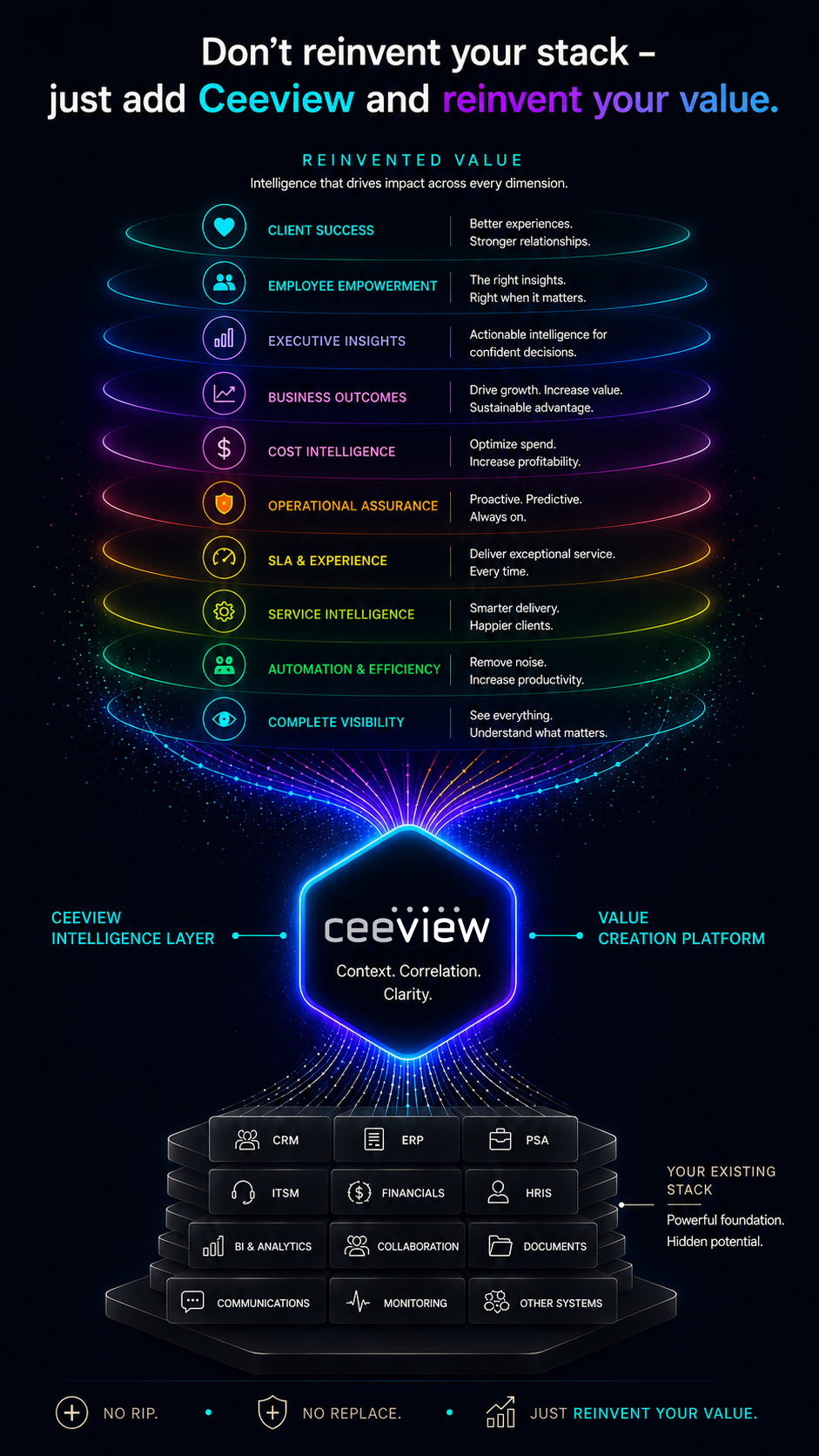
Fredrik Spolén’s statement, “Don’t reinvent your stack — just add Ceeview and reinvent your value,” captures a powerful shift in operational intelligence strategy. This article explores the philosophy behind the statement, and how Ceeview helps organizations amplify visibility, context, and business value from the systems they already own.
In many organizations today, the technology conversation still begins with replacement.
Replace the platform.
Replace the dashboard.
Replace the monitoring tool.
Replace the operational model.
But what if the problem is not the stack itself?
What if the real issue is that organizations still struggle to fully unlock the operational intelligence, business context, and value already hidden inside the systems they own?

That thinking is what inspired a statement our CRO, Fredrik Spolén, often uses in his posts:
“Don’t reinvent your stack — just add Ceeview and reinvent your value.”
At first glance, the statement may sound simple. But behind it sits a much larger philosophy about operational intelligence, observability, business visibility, and how modern organizations can evolve without ripping apart the foundations they already rely on.
The Stack Is Rarely the Problem
Most organizations already have significant investments across their operational ecosystem:
- CRM systems
- ERP platforms
- PSA solutions
- HRIS platforms
- Financial systems
- Collaboration environments
- Monitoring tools
- Cloud infrastructure
- Service management platforms
- Analytics systems

These environments often contain enormous operational potential.
The problem is not usually the absence of data.
The problem is fragmentation.
Signals exist everywhere, but context is missing.
Operational data remains trapped inside disconnected systems, dashboards, teams, and workflows.
As a result, organizations frequently experience:
- limited visibility
- reactive operations
- duplicated effort
- disconnected business insights
- service blind spots
- operational noise
- delayed decision-making
Not because their stack lacks capability — but because their stack lacks correlation, intelligence, and unified visibility.
Amplifying Operational Value
One of the most powerful concepts behind the statement is the idea of value amplification.
When organizations gain contextual visibility across systems, the impact expands outward across multiple operational and business dimensions.
Not just IT.
Not just monitoring.
Not just dashboards.
But broader organizational value.
That amplification can include:

Complete Visibility
- Understanding what matters across operational environments, services, and business systems.
Service Intelligence
- Connecting operational signals to service delivery and business outcomes.
SLA & Experience Assurance
- Maintaining operational confidence and proactively protecting service quality.
Operational Assurance
- Moving from reactive firefighting to predictive operational awareness.
Cost Intelligence
- Connecting operational understanding with financial visibility and optimization.
Executive Insights
- Providing actionable intelligence for better strategic decisions.
Employee Empowerment
- Delivering the right insights to the right people at the right time.
Client Success
- Improving experiences, service quality, and operational trust.
Business Outcomes
- Creating measurable operational efficiency, optimization, and business performance improvements.
This is where the phrase “reinvent your value” becomes especially important.
Because the transformation is not merely technical.
It is organizational.
From Operational Signals to Business Intelligence
Traditional monitoring approaches often focus on isolated infrastructure visibility.
Ceeview expands that model.
Operational signals become:
- correlated
- contextualized
- service-aligned
- business-aware
- actionable

Infrastructure, services, operational systems, financial insights, business processes, user experience, and analytics can all contribute to a broader operational intelligence model.
The result is not simply more data.
The result is greater clarity.
And clarity creates value.
No Rip. No Replace. No Reinvention.
One of the reasons Fredrik’s statement connects so well with modern organizations is because it reflects operational reality.
Most enterprises and MSPs are not looking to completely rebuild their environments from scratch.
They are looking to:
- optimize what they already own
- improve visibility
- reduce operational friction
- connect intelligence across silos
- create better outcomes
- deliver higher operational value
That is a fundamentally different philosophy than traditional “rip and replace” approaches.
And it aligns directly with how Ceeview is positioned:
Not as another isolated monitoring product.
But as a Value Creation Platform.
A platform that helps organizations amplify the intelligence already present within their operational environments.
Reinventing Value
The most important word in Fredrik’s statement may actually be the last one:
Value.
Because operational intelligence should not end at infrastructure awareness.
It should extend into:
- service performance
- operational efficiency
- cost optimization
- business alignment
- executive visibility
- customer experience
- organizational performance
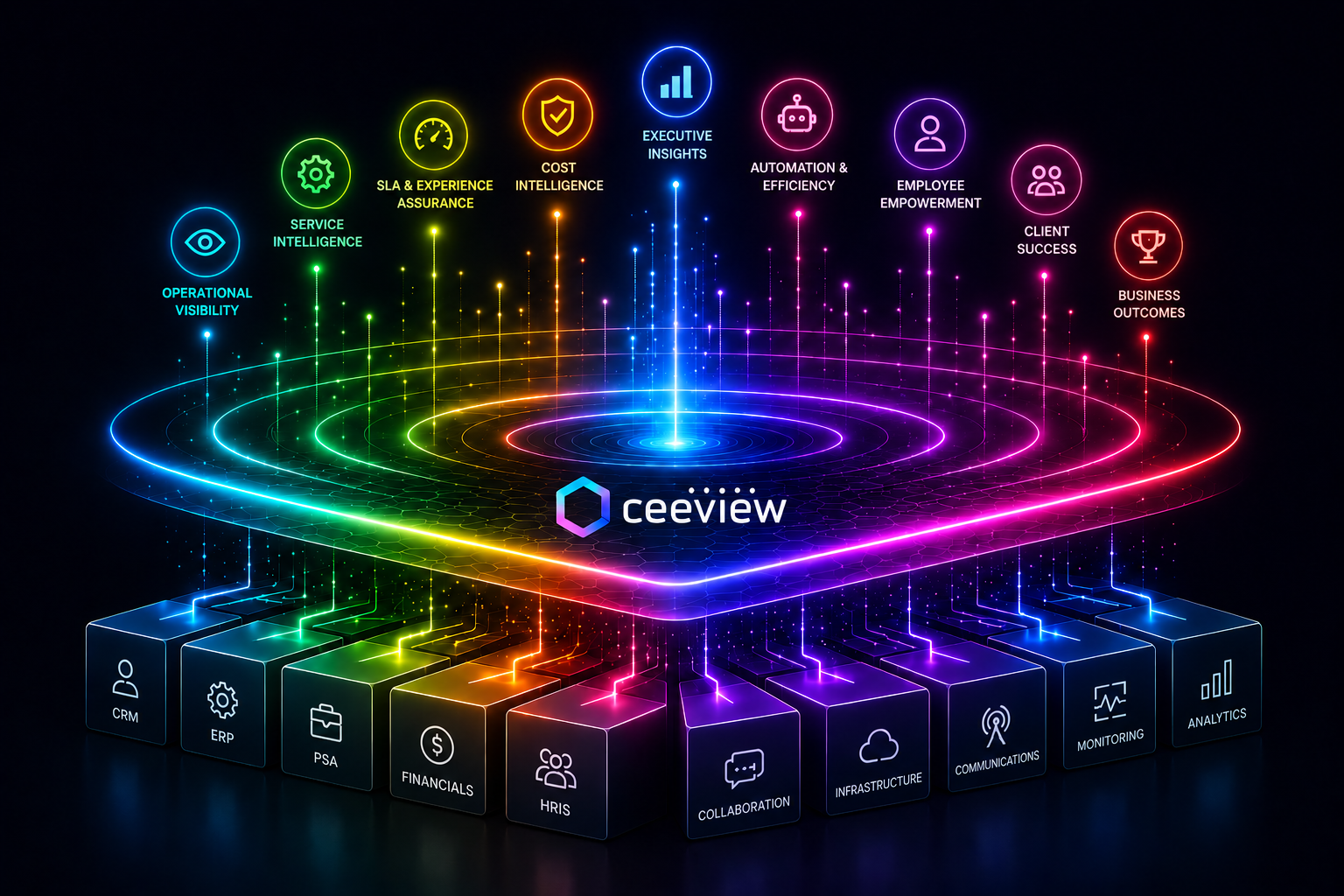
That is where true operational visibility becomes transformational.
Not when organizations reinvent their stack.
But when they finally unlock the value already hidden inside it.
About the Author: