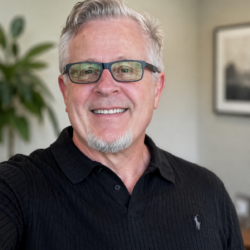
A recent Finansavisen profile looked back across Ceeview co-founder Dag Lund’s remarkable technology journey. But perhaps the most interesting part of the story isn’t where he’s been. It’s what that experience means for what Ceeview is building today.
The Story Behind the Story A remarkable journey.
A new chapter.
Decades of experience. New perspectives.
And a willingness to keep learning,
listening, and building.
A remarkable journey.
A new chapter.
Decades of experience. New perspectives. And a willingness to keep learning, listening, and building.
When Norway’s Finansavisen recently sat down with Dag Lund, the conversation was originally supposed to be about investing.
It became something quite different.
The resulting front-page story traced a technology journey from Norsk Data to Silicon Valley and meetings with Steve Jobs at NeXT, through building Nimsoft alongside Anders Grindland, Carstein Seeberg and a great team, and its eventual $360 million acquisition by CA Technologies.
It is an impressive history.
But history becomes especially valuable when you bring its lessons forward.
Today, Dag is building again—alongside people who have shared parts of that journey and others bringing new perspectives and experience. Decades of successes, setbacks, changing technologies and changing markets have reinforced some deceptively simple ideas: great technology isn’t enough, the right people matter, customers need to remain close to what you’re building, and experience is most useful when you’re still willing to listen, learn and adapt.
Those lessons are helping shape Ceeview today.
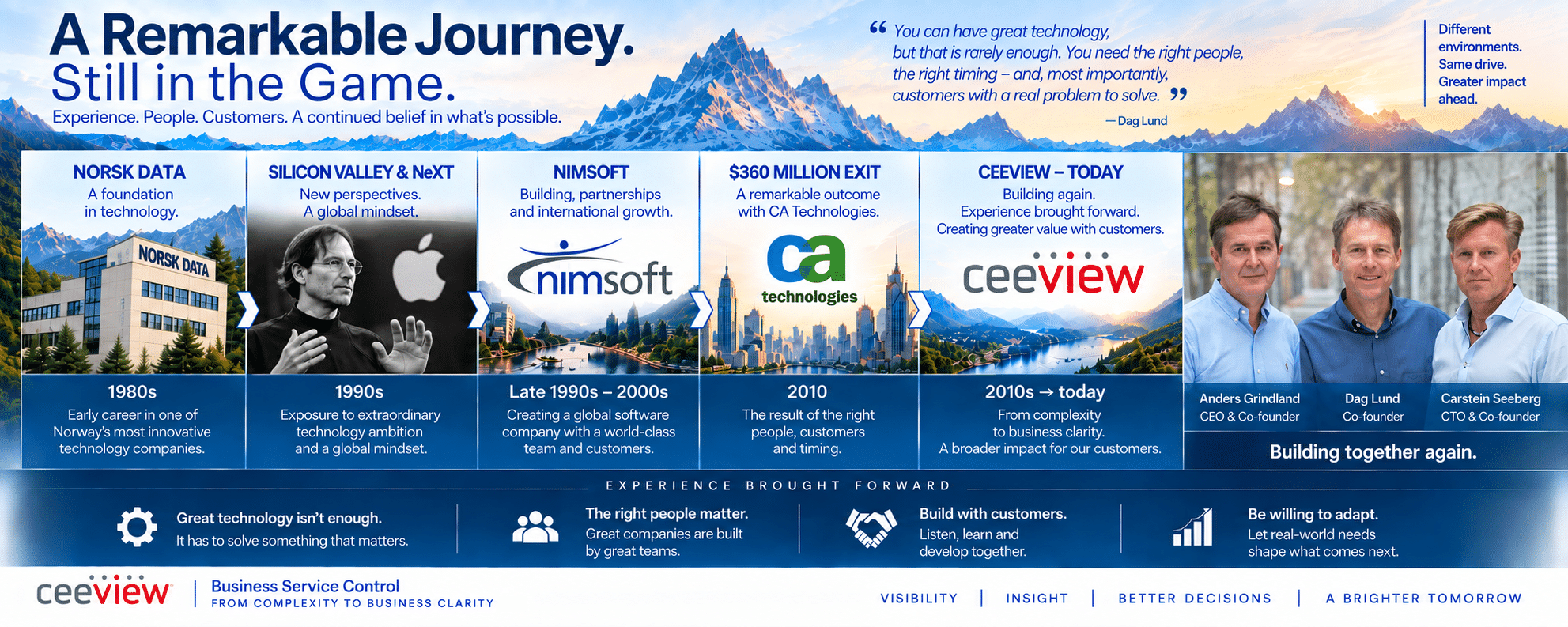
Great technology isn’t enough
Technology companies naturally spend a great deal of time thinking about technology.
Dag’s experience suggests that technology is only part of the equation.
Great products still need to solve problems that matter. Strong people need to come together around those problems. And what gets built needs to remain connected to the people who will ultimately use it.
That may sound straightforward. Maintaining that discipline as technologies, companies and markets evolve is considerably harder.
Dag has experienced extraordinary success as well as setbacks along the way. He has worked through multiple generations of technology, helped build a software company into an international competitor, navigated periods of enormous market change and seen what happens as organizations grow.
The result isn’t a belief that past success provides all the answers.
It is perspective about how better answers are found.
Building with customers
One of Dag’s most important observations in the Finansavisen conversation concerned the direction of Ceeview itself.
He doesn’t describe the company’s future as something completely predetermined.
Instead:
The product has to develop together with the customers.”
And if what customers need reveals a different direction, Ceeview needs to be willing to adapt.
That philosophy places customers much closer to the process of building the company.
Customers understand their own environments, operational realities, priorities and challenges in ways a technology vendor cannot fully understand from the outside.
Ceeview brings technology and product expertise. Customers bring another form of expertise.
Put those forms of intelligence close together, and better solutions can emerge.
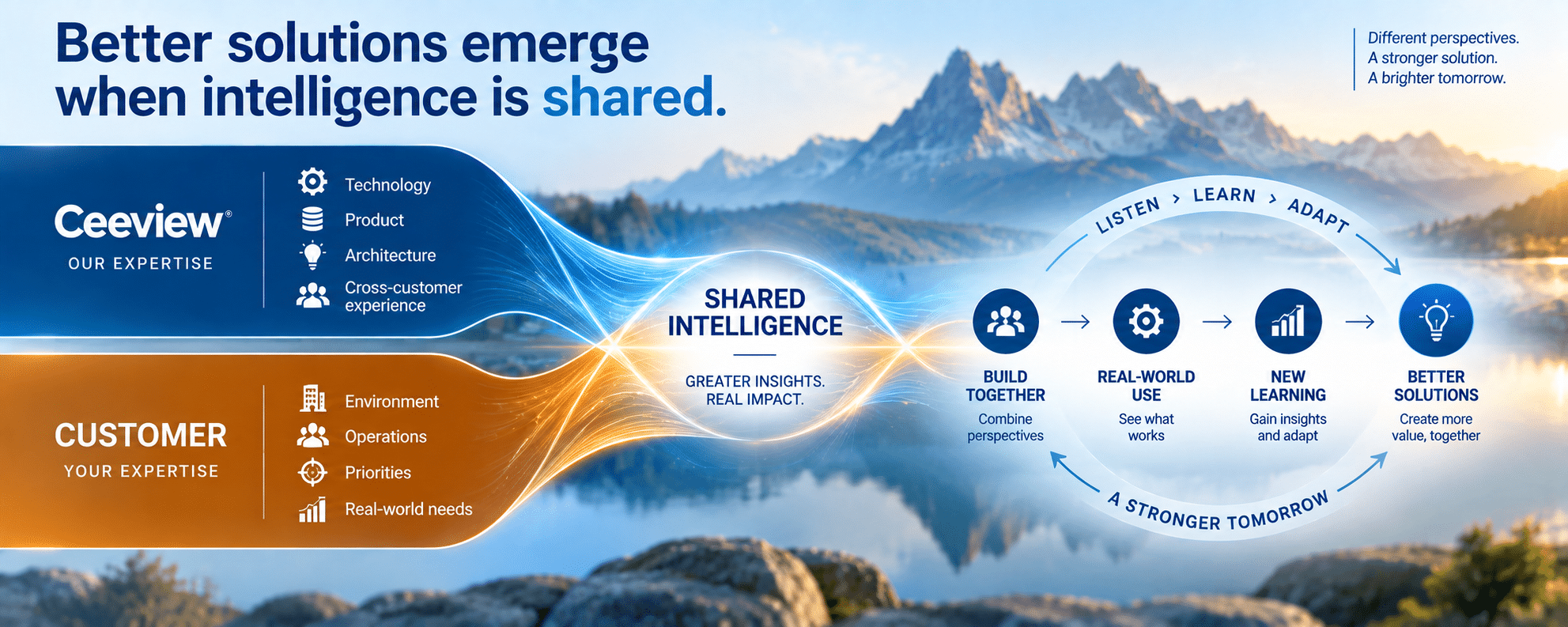
That means listening closely enough for customer experience to challenge assumptions. It means learning from how technology performs in real environments. And it means being willing to let those insights influence what comes next.
Customer proximity isn’t simply a way to collect feedback.
It is part of how Ceeview learns.
The right people matter
There is another lesson running through Dag’s story: meaningful outcomes rarely come from one person having every answer.
Technology is built by people.
Companies are built by people.
And strong ideas become better when capable people are close enough to challenge, refine and improve them.
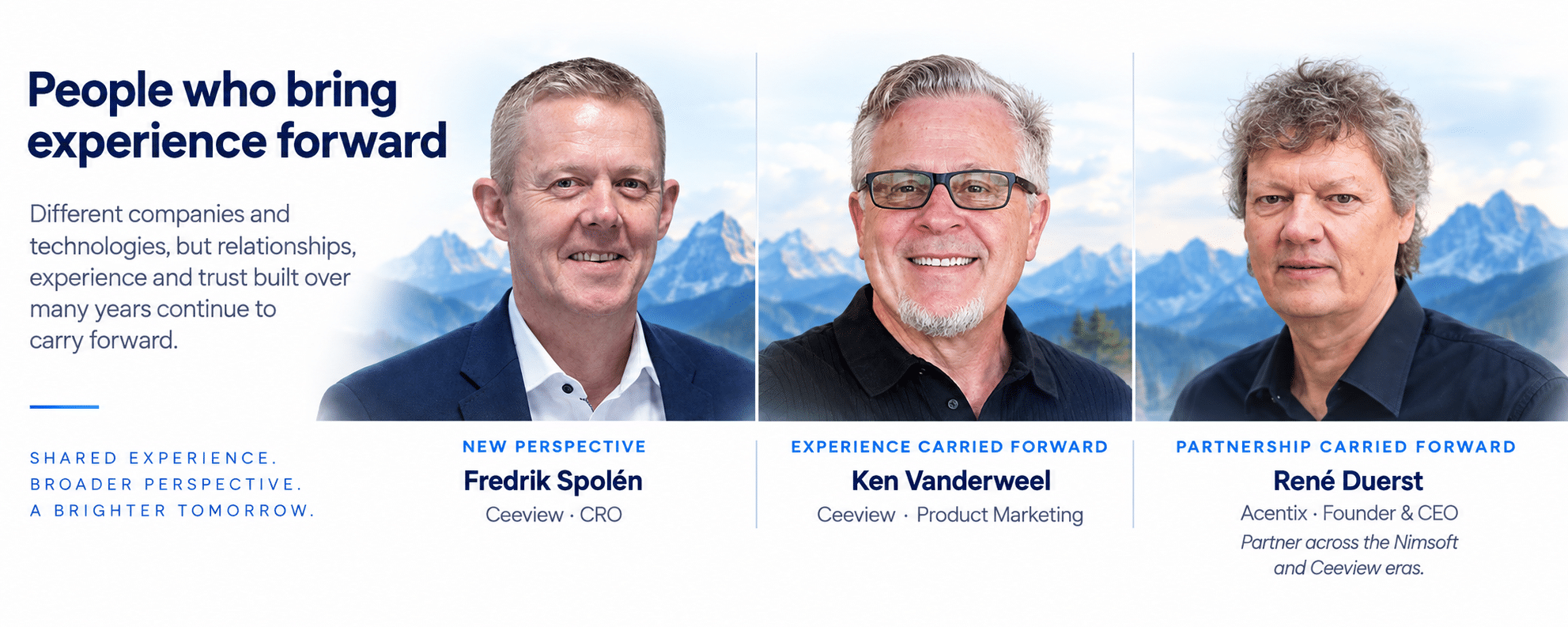
That lesson is reflected in Ceeview itself. Today, Dag is once again building alongside co-founders Anders Grindland, CEO, and Carstein Seeberg, CTO, together with Fredrik Spolén, CRO. Across the team, business experience, technology leadership and decades of lessons from building software companies are being brought forward into Ceeview.
There is continuity in some of those relationships as well. Ken Vanderweel, who works with Ceeview today, has worked alongside Dag at different points in his technology journey since 1995. René Duerst, founder and CEO of Swiss technology partner Acentix, brings another connection spanning the Nimsoft and Ceeview eras. Different companies and technologies, but relationships, experience and trust built over many years continue to carry forward.
But the value of bringing the right people close to a problem reaches beyond the Ceeview team.
The people bringing intelligence to a problem can include engineers, business leaders, partners and customers—each seeing something from a perspective the others may not.
Experience doesn’t remove the need for those different perspectives.
If anything, it makes their value clearer.
Experience without rigidity
There would be an understandable temptation after a career like Dag’s to approach the next company with a formula:
We succeeded before. We know how to do this.
What emerges from his Finansavisen conversation is more interesting.
Experience provides judgment, but it should not create rigidity.
Markets change. Technologies change. Customer problems change. Sometimes the assumptions you begin with need to change too.
That makes adaptability a strength rather than an admission that the original answer was wrong.
Listen. Learn. Develop together. Adapt.

Those ideas are easy to say.
Decades of building technology companies provide a different appreciation for why they matter.
From complexity to business clarity
Ceeview is being built for a technology environment that has changed enormously since the early days of Norsk Data and Nimsoft. But one challenge remains surprisingly familiar: organizations still struggle to turn growing technical complexity into information that is meaningful to the business.
Today, that complexity spans infrastructure, applications, cloud environments, monitoring platforms, APIs and industry-specific operational systems—all generating more technology and operational data than ever before.
That experience is part of what Ceeview brings forward today.
Ceeview’s Business Service Control approach connects technology information to the business services it supports, giving management clearer visibility into service quality, performance, cost and risk.
The goal is not more data.
It is better understanding—and better decisions.
Business-service visibility in practice
Sverre Benjaminsen · KLERI
Aquaculture offers a compelling example. Distributed infrastructure, sensors, networks and operational systems generate enormous amounts of information across interconnected environments.
Sverre Benjaminsen, CCO Aquaculture at Ceeview customer KLERI, explains what matters when that information needs to support real operational decisions.
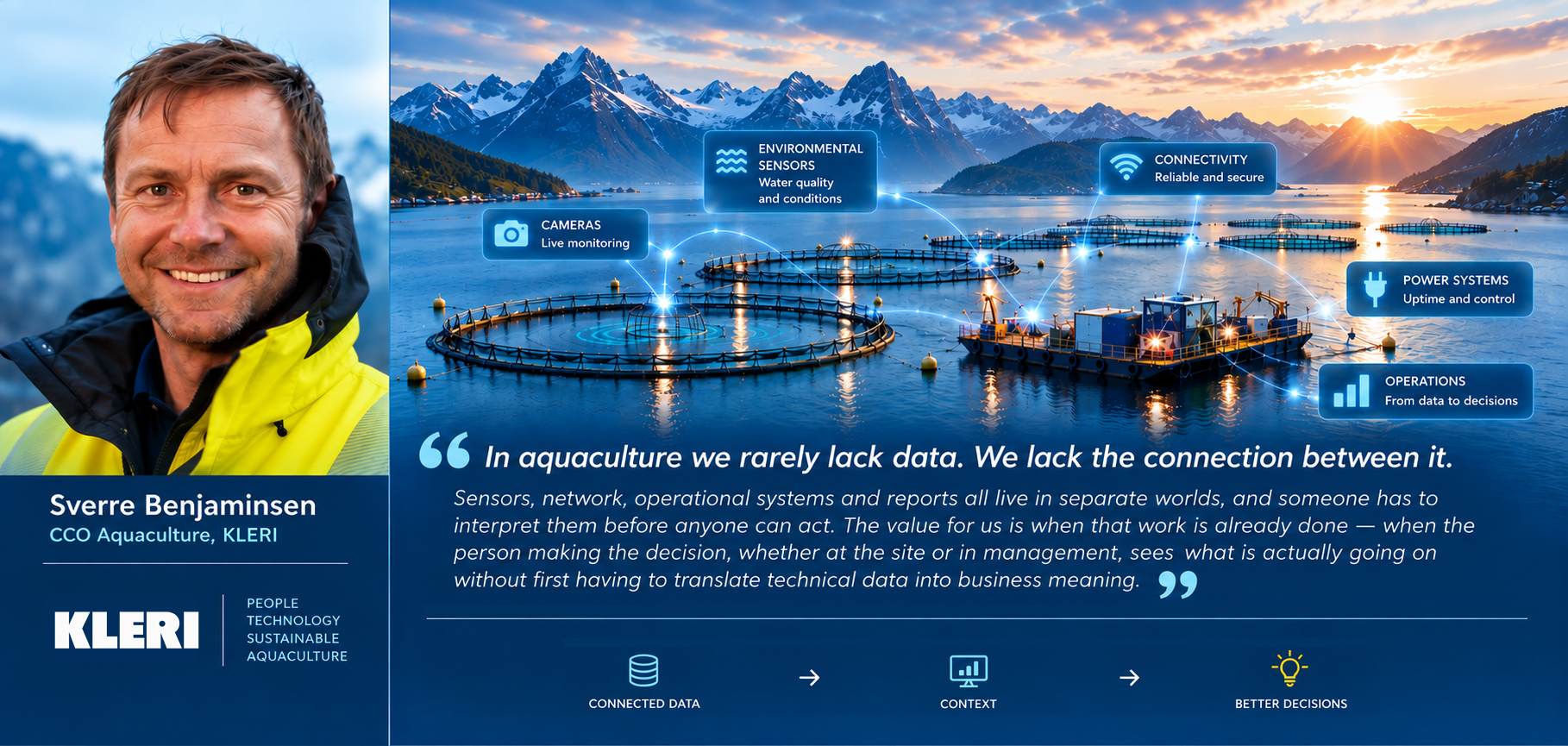
Sverre’s perspective illustrates how business-service visibility can bring greater operational understanding to a complex industry, connecting technology information to the realities of the aquaculture businesses that depend on it.
The same principles extend well beyond aquaculture.
Across industries
René Duerst · Acentix
That same need to connect business requirements with complex technology environments is central to the ongoing collaboration between Ceeview and Swiss technology partner Acentix.
Drawing on years of customer experience and technology integration, René Duerst and the Acentix team bring practical insight into creating unified business-service visibility across different industries and operational environments.
The accompanying illustration brings that thinking into focus.
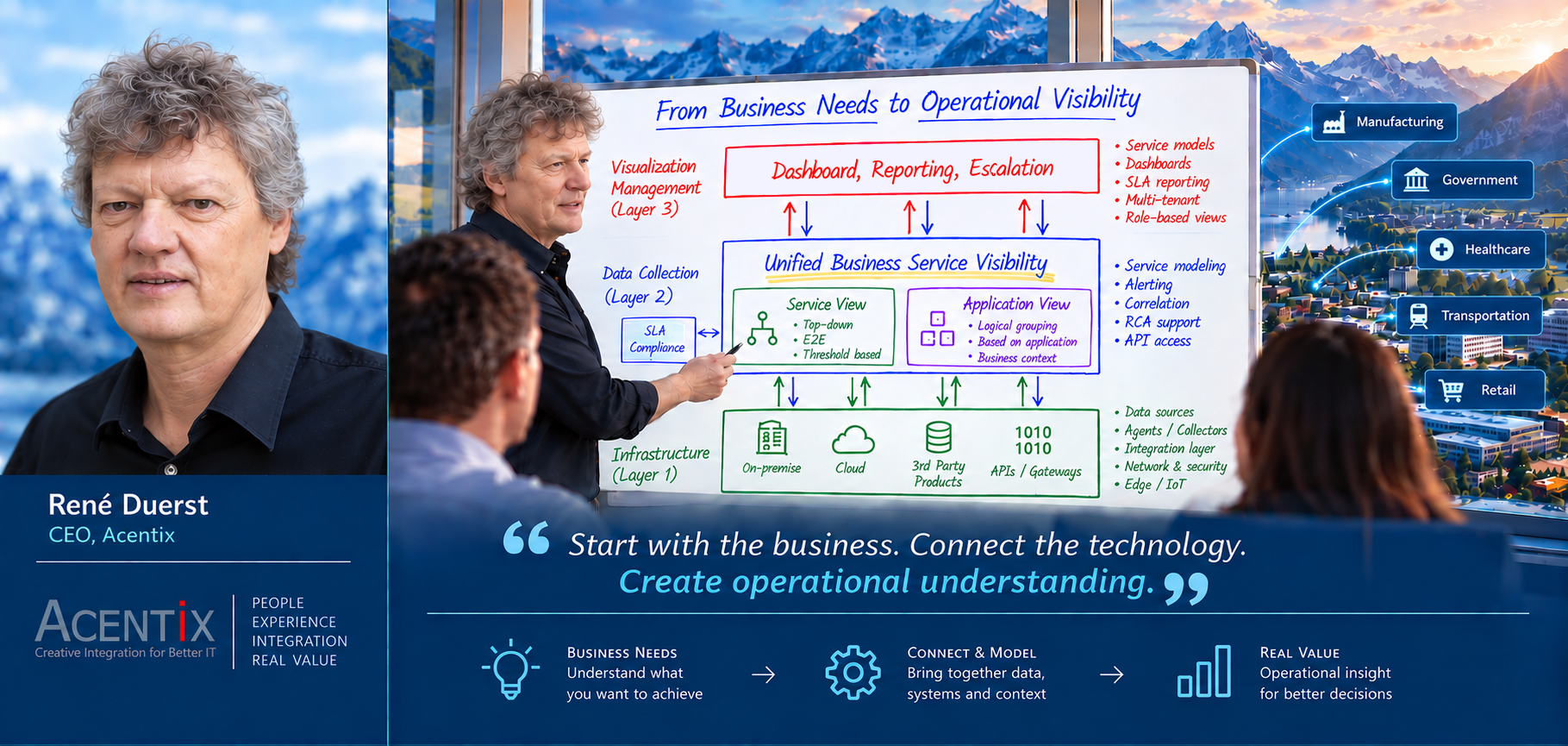
Start with the business need. Connect and model the relevant technology. Create operational understanding that supports better decisions.
Different industries, different environments and different requirements—but a common objective: making technology information meaningful to the business.
Getting there requires more than technology.
It requires the right people.
It requires staying close to customers and the problems
they are trying to solve.
And it requires being willing to keep learning.
Still in the game
Perhaps that is what makes Dag’s journey particularly relevant today.
The Norsk Data years matter.
Silicon Valley matters.
Nimsoft matters.
The $360 million acquisition matters.
But none of those milestones is the endpoint of the story.
What matters now is what comes forward from them.
Experience. Perspective. Judgment. The importance of people. The intelligence customers bring. And the willingness to keep adapting as you learn something new.
Different technology.
Different challenges.
A new company to build.
A remarkable journey. A new chapter.
Still in the game.
About the Author: