Modern IT environments aren’t short on data — they’re short on coherence.
Operational systems, cloud platforms, Kubernetes workloads, business tools, and external data sources all generate valuable signals. The challenge is turning that diversity into a single, service-aligned view of how the business actually runs — without ripping and replacing what already works.
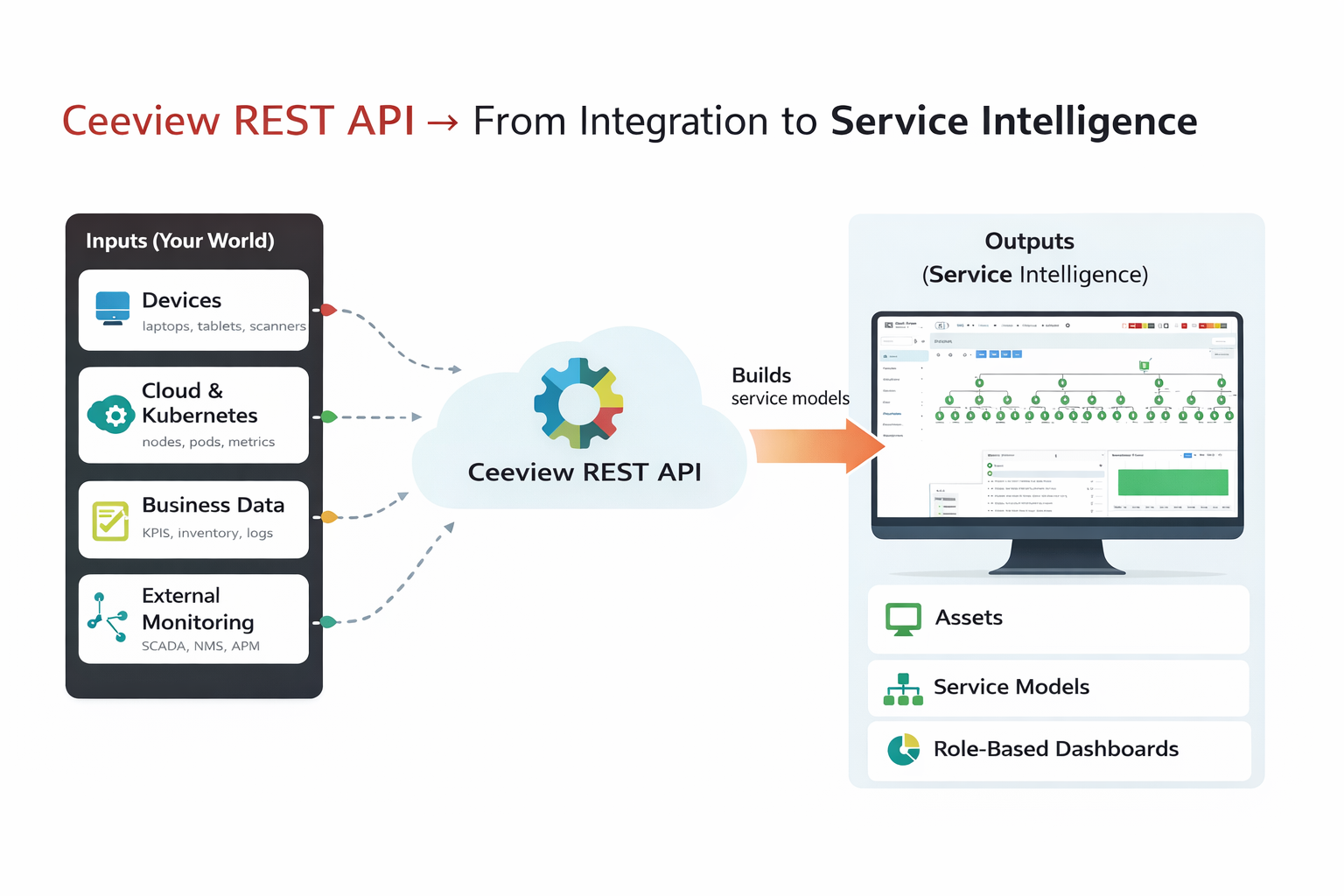
At the recent Ceeview User Conference, long-time partner Acentix delivered a ▶️ standout session that showed exactly how this can be done using the Ceeview REST API.

“The Ceeview API is incredibly powerful. It lets us model our entire world—automatically.”
— Lukas Bayard, Business IT Specialist, Acentix
One API. Unlimited Integration Possibilities.
In the session, Lukas Bayard walks through how Acentix uses Ceeview’s APIs to connect disparate environments, automate service modeling, and surface real-time service intelligence through role-based dashboards.
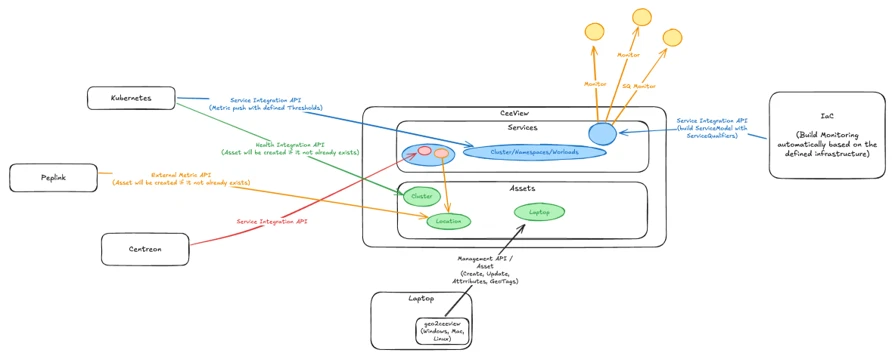
Rather than duplicating monitoring or forcing standardization, Acentix integrates existing tools and domains directly into Ceeview, allowing service models to reflect reality — not theory.
The result is a flexible, automation-first approach where visibility is built, updated, and maintained through the API.
From Integration to Insight: Five Real-World API Scenarios
Lukas structures the presentation around five concrete scenarios that show the breadth — and depth — of what’s possible with the Ceeview API.
1. API-Driven Mobile Device Tracking
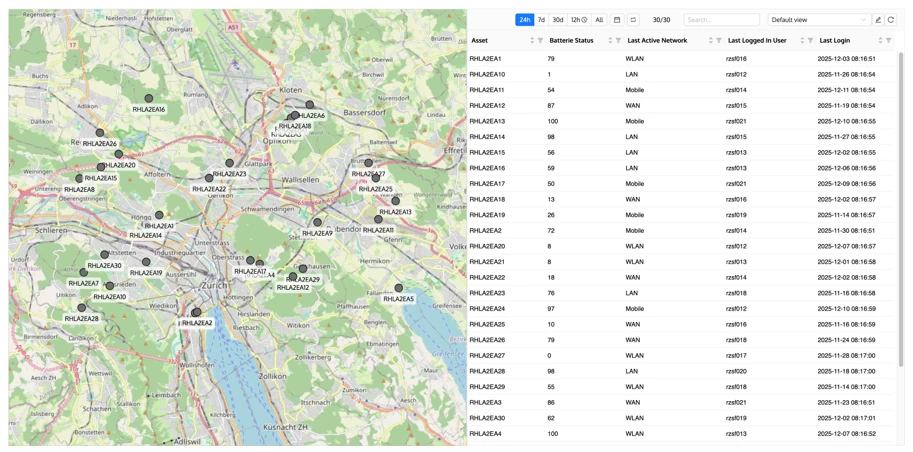
For a national protection and rescue organization, Acentix built a lightweight executable — geo2ceeview — that uses the Ceeview API to track mobile field devices only when they’re active.
Using just a few API calls, the solution:
- Auto-creates or updates assets
- Adds geolocation data
- Enriches devices with operational attributes like battery status, last login, and network connection
That intelligence is then visualized directly in Ceeview dashboards, combining maps and data grids for immediate situational awareness.
2. Unified Network Service Modeling Across Tools
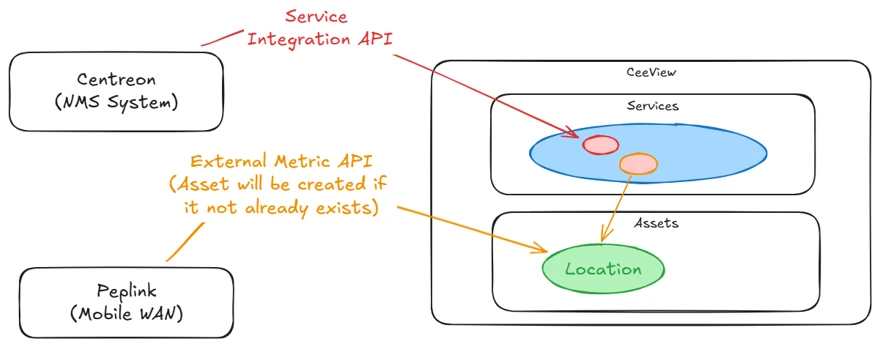
Many organizations already rely on specialized monitoring platforms. Instead of replacing them, Acentix uses the Service Integration API and External Metric API to unify their outputs.
In one example, data from Centreon and Peplink is combined into a single service model that represents the end-to-end operational service — not just individual components.
As environments change, the API keeps the model accurate automatically.
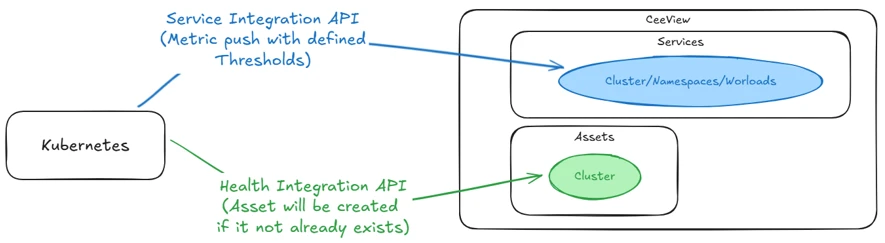
3. Dynamic Kubernetes Service Modeling
Kubernetes environments are inherently dynamic — which makes static service definitions impractical.
Using the Kubernetes API alongside Ceeview’s Service Integration and Health APIs, Acentix auto-generates service models that reflect:
- Clusters
- Deployments
- Services
- Ingress controllers
As workloads change through CI/CD pipelines, service models update in real time — without manual intervention.
4. Infrastructure-as-Code Meets Observability
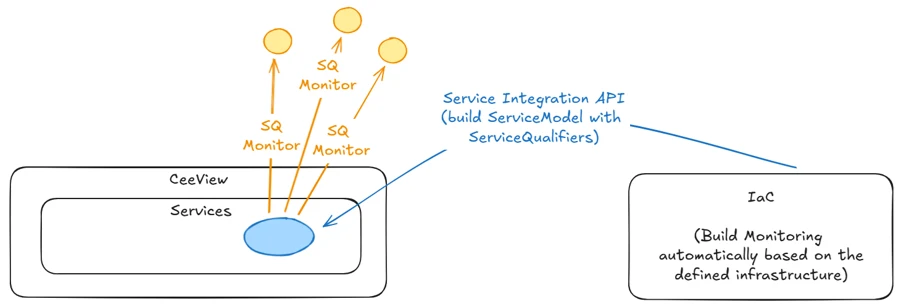
Acentix also demonstrated how Ceeview’s API fits naturally into Infrastructure-as-Code (IaC) workflows.
As infrastructure is provisioned, the same code can:
- Create service models
- Apply service qualifiers
- Define monitoring logic
In effect, monitoring becomes part of the deployment process, ensuring visibility is present from day one.
5. Datasources as a Business Data Hub
In the final scenario, Lukas shows how Datasources — powered by the API — turn Ceeview into a hub for business and operational data.
Security posture, patch levels, inventory data, and KPIs from external platforms are ingested and visualized directly in Ceeview dashboards.
As Lukas puts it, Datasources are like “Power BI inside Ceeview” — focused not on alerts, but on decision-ready insight.
Why This Matters
Across all five scenarios, the pattern is consistent:
- The Ceeview API auto-creates and maintains service models
- Integration replaces duplication
- Automation replaces manual effort
- Dashboards become the expression of real service health — for IT and the business
For organizations exploring integration, automation, or service-centric observability, this session offers practical patterns that can be applied immediately.
▶ Watch the Session
🎥 How Acentix Uses the Ceeview API to Build Dynamic Service Intelligence
Whether you’re an architect, integrator, MSP, or platform team, this presentation is a compelling reminder of what’s possible when APIs are treated as a first-class capability.
If you’re evaluating how to connect your world to Ceeview — this is the place to start.
About the Author: